Showing posts with label controls. Show all posts

Monday, 13 May 2013

CHI 2013 (Part II) - Citizen Science, biometrics, gamification@work and student games

So on to part two. Apart attending a workshop, I also presented a poster at CHI: Do Games Attract or Sustain Engagement in Citizen Science? A Study of Volunteer Motivations (see below). The poster is based on some work being carried out as part of the Citizen Cyberlab project that Charlene Jennett and Anna Cox are involved with. The paper reports on the findings of a set of pilot interviews that Cassandra Cornish-Trestail carried out with people who play citizen science games - in this case, Foldit and Eyewire. The answer to the question in the title is no, game mechanics didn't seem to attract volunteers but, in addition to tools such as chat facilities and forums, they do help to sustain involvement over time. Essentially, the people who play these games are already interested in science, they aren't gamers. In addition, what game mechanics allow for is greater participation in a range of social interactions while also providing ways in which to recognise volunteer achievements as being meaningful. I really quite enjoyed chatting about the poster and luckily there were quite a few interested people to chat too :-)


I got to meet Elaine Massung a researcher from Bristol who was involved in the Close the Door project - where they were investigating motivations around crowdsourcing to support forms of environmental activism. Interestingly, their work suggests that game mechanics such as points can actually decrease motivation for some people. I also met Anne Bowser, a PhD student from Maryland University who presented the PLACE (Prototyping Location, Activities and Collective Experience - see below) framework for designing location based apps and games earlier on in the conference. I enjoyed hearing about Anne's work with on floracaching (a form of geocaching) and how they developed the Biotracker app - a serious geocaching game for citizen science that encourages players to gather plant phenology data. I'm hoping to be able to use at some point in the UK too!


Anne presented at the session on game design, where I also got to hear about Pejman Mirza-Babaei's work on Biometric storyboards. Unfortunately, Pejman couldn't make the conference but his supervisor Lennart Nacke was there to present the paper. I first became aware of Pejman's work during my PhD and it was really nice to see how far it had come. I'm not a big fan of biometrics, I didn't find the raw data I collected to be useful in relation to identifying game-play breakdowns and breakthroughs within my case studies but the tool that was presented during this talk was pretty cool. It allows for designers to consider the what they want players experience to be (see below) and provides a neat visualisation of the GSR (galvanic skin response) and EMG (electromyography) data that can them be compared with what was intended. The fact the Pejman also compared using this tool with a classic user testing approach (alongwith a control group) was great too and the results indicated that the BioST approach did lead to higher game-play quality. However, I do have some questions about the work carried out, even after reading the paper. The main thing I'm not sure about is whether the BioST approach took more time than the standard gamer user experience approach. This is important, as I know from visiting Playable games, there isn't always a lot of time to get some feedback and provide suggestions to designers. There weren't actually that many differences between the BioST and Classic UT approach, is the former really worth it if it takes a lot longer? I was also unsure about how the tool dealt with artefacts such as movement - does the researcher have to manually clear these up and how long does this take? Finally, I noticed that the BioST tool allowed for player annotations where it looks like players were asked to review a recording of the game-play session and add their comments but I'm pretty sure the classic UT condition didn't also do this... Considering this is what I asked my participants to do and I got a lot of rich data from it, I wondered whether the conditions really were a fair comparison - could the player reviews have been helpful without the biometric data? Nevertheless, I do like that the tool presented does not consider biometric data alone as I think it's important to give player's a voice too. Also, I think the way in which the biometric data was visualised provided designers with a powerful tool for interpreting play experiences so I'd be keen to see more research like this.


Later on I attended the Gamification@Work panel, which has a really interesting mix of people including Sebastien Deterding and a number of people from industry. I particularly liked Sebastien's emphasis on ensuring that autonomy isn't taken away from people when using gameful approaches at work. He also provided us with some quotes from games journalists which clearly indicated how when you have to do something for work, even playing games, the activity can lose it's appeal. I took a lot of notes in this session as it got me thinking about how I would design a game (or gamify a task) but I'm still mulling over these. The people from industry also had some insightful contributions to make but I couldn't help coming away from the session a little concerned about how game mechanics can be used to track performance and manipulate people into behaving in different ways. Why does this make me uncomforatble in relation to work but less so in relation to education or promoting health? Some interesting questions were also raised at the end and while measurements may be important for showing improvement (or lack of it) it's important to remember that not everything can be reduced to metrics.

Other highlights from the latter part of the conference include the student game competition - the quality of games was seriously impressive and I'd really quite like to check out a few of them including Machinneers (a lovely looking puzzle adventure for children stealthily teaches logical thinking, problem solving and procedural literacy), ATUM (an innovative multi-layer point and click game) and Squidge (a really cute game controller that monitors player heart rate - see below); the Women's Representations in Technology panel - again a seriously interesting mix of people and perspectives which got me thinking about feminism and how gender isn't necessarily binary; Razvan Rughinis' paper on badges in education - where he discussed badge architectures and how they can be used to chart learning routes; and finally Bruno Latour's keynote - I have to be honest and say I did not find this the easiest talk to follow but I'm sure it got my brain working! There are definitely other people who have got a better handle on it than I do (e.g. J.Nathan Mathias).


It was a huge conference and in addition to the other talks I haven't mentioend, there are also a few sessions I didn't get to go to so I've also got paper on persuasive games and behaviour change to my reading list. In general though, the conference gave me lots to think about especially in terms of how I want my own research to continue, especially in terms of considering games in relation to my work on CHI+MED, which there may be more to say about later on...

Thursday, 12 January 2012

Interactive punching bag

Ok, so this isn't directly game related but it could be, depending on what you use the device for. This summer, six 18/19-year-olds built an interactive punching bag as a summer project at the Open University. Think of it as a game interface, with lights, sounds and sensors. If you like it, please feel free to do so on youtube and to share the video as it would be great to give their work some exposure.

Monday, 4 October 2010

Eurogamer Expo 2010

I spent yesterday afternoon at the Eurogamer Expo at Earl's Court in London. Here's a photo of me trying out Fallout: New Vegas.


As I just picked up from where someone else left off, I had no idea what I was doing so ended up shooting randomly at some people I think I was probably supposed to help. I didn't play for long as the people weren't very happy with me shooting at them and I died pretty soon after, so I'm not sure what to say about it. It felt a lot like the previous Fallout I guess, though the colours were less grey and more orange this time. Hmm, I'm thinking whatever happens after this PhD, I'm probably not going to get paid for writing game reviews... I know these events are supposed to give you a chance to try new releases, but I'm not sure how comfortable I feel playing in public. It seems a little too close to performing, even though I'm pretty sure no one is actually judging how well I'm doing. Plus, I think when it comes to new games, I prefer to try them out in my own time and space so I have a chance to get a feel for them - without the possibility of a queue forming. Though I was impressed with these guys trying out Dance Central on Kinnect.


So I saw Kinnect and the Playstation Move but didn't see any games for them that made me think I must try them. A lot of them seem to be party games - Wii Sports type spin-offs - which is fine, but I'm not sure that's going to convince me to shell out for either of them (especially when I already have a Wii). I'm sure there was an Xbox game that only literally involved you jumping, again, and again... Apparently, Heavy Rain has been modified so you can play it with the Move now, but I didn't have much luck finding it. I would have gone back after attending the last developer session to check again but the ensuing tube strike meant I wanted to leave a little earlier than I had originally planned.

If I'm really honest, a lot of the games at the exhibition came across as looking quite similar. Most of them involved running around with a weapon attacking monsters/aliens/humans in a post-apocalyptic/alien/war setting. Little Big Planet 2 was there, and looks as cute as the first, though apparently the level editors are easier to use. I also saw Rock Band 3 , which now has a keyboard accessory (even more plastic toys for my living room!). Nintendo was there too, but once I realised they weren't showing off a 3DS I moved on. Speaking of 3D, I did notice a lot of the games were being played with 3D glasses, and I think there were some 3D TVs. I probably would have been more impressed though, if the glasses NVidia gave out to watch their 3D demo had actually worked... I guess I'm just not convinced the technology is there yet, even if I could afford it! There was also an indie arcade, which perhaps I should have spent a bit more time at if I was looking for something different, but generally, I really can't say much really stood out. Maybe that says more about my reluctance to try lots of things though, than about what was on offer.

What I really did enjoy though was the developer sessions. First, I got to see Mike Simpson from Creative Assembly talk about Shogun 2 . I never played the original Total War game but what I saw and heard made me want to try out the second one. I think what I liked about it was how he talked about them using history - and not like it was a problem - in terms of it being the inspiration for the game and wanted to keep as close to it as possible. Someone asked whether the team had trouble deciding between whether to make it historical or fun, but his answer suggested that was actually quite a rare occurrence, with a lot of the fun stemming from the history itself. He also talked a lot about game strategy, perhaps with out meaning too, but it was pretty interesting to hear him talk during the demo about things like the best way to defeat archers (use a cavalry unit to sneak up behind them). I guess he (and experienced players) would take that sort of knowledge for granted but the rest of us have to pick it up as we play. It looks very pretty too, with a lot of work going into the details, like the Japanese trees. Apparently, it's been 10 years in the making (if you count the time if took to produce the original) - a lot of patience has gone into this game, and it shows. 

The other session I went to was held by Tim Willits (id Software) about RAGE there latest shooter. For those of you who don't know (and to be honest, I didn't until my friend Ashley told me at the expo), Tim Willits was involved in Doom and Quake, and there were a lot of people in the audience who were very pleased to be able to see him. He spoke a bit about Id tech 5 - the companies latest game engine - which allows for much more graphical detail. There was someone else there who played through sections of the game, but you could see that Tim was keen to point out how the engine allowed them to give different areas of the game, and enemies, a unique feel. He made a point about player choice too - through the addition of engineering items you can create your own weapons, while there are different sub-missions you can take on that allow you to indulge in vehicular combat, for instance, if you want to. It looks great but it was kind of funny to sit through the demo though. I mean, it's not really the sort of game I go for and I couldn't help but think that the story and mechanics were feeling strangely familiar - post-apocalyptic world, mutants, doing side-missions etc - and for all the talk about choice, the choices are mostly about how you decide to kill the bad guys . It's not like I can choose to set up a business and make money or find a cure for the mutants or something. But the majority of the audience was there to see an extremely polished shooter with awesome graphics, and I'm positive that is what they will get when it comes out next year.

I feel like I'm being a bit negative about shooters. What's wrong with wanting to indulge in a bit of carnage? It's not fair really, and probably the reason I don't like them so much is I'm not very good at them (and can't be bothered to get good). And obviously, there's a serious market for these sorts of games but I guess I'm just personally, not that interested. I did notice though that both Mike Simpson and Tim Willets talked about expansion packs, downloadable content and modding communities. Before the games are even out, they are figuring out ways to make them last longer (and presumably ways in which to make more money out of them - but when games like this have taken years to develop, who can blame them?). There must be a way serious games could do the same? Plus, both studios have a history of supporting modding, so it was nice to see that they were keen to continue that. It made me think a little about gaming audiences, and how I don't really know anyone who creates mods. A friend of mine from uni used too, but that's about it. I wonder how many people out there do and what they think about games like Little Big Planet which attempt to make that sort of thing easier for players? Though I imagine, building a mod for Quake is very different to creating a level for LBP...

All in all, I enjoyed the expo. I'll have to see whether I'll go next year or not, but for now, here is a rather blurry photo of someone playing a driving game on Kinnect. I think it sums up well why I don't want to play a driving game on Kinnect.


Saturday, 13 March 2010

Heavy Rain (PS3)

It's been longer than I thought since I last wrote but since then I bought myself a PS3 and have been playing lots of games :-) One of which is Heavy Rain.


I really enjoyed this game. Actually, enjoyed might be the wrong word, as I'm not sure I've played anything that's made me feel the way Heavy Rain has, especially in terms of experiencing guilt. I should probably post the obligatory SPOILER ALERT here as I will be discussing what happened when I played the game, though I won't reveal the identity of the Origami Killer. I don't want to spend half this post telling you about the game itself though, as this is less of a review and more a way to document my own response to it. For those who know little about the game though and don't plan on playing it go here for a synopsis.

So first off, it's probably worth knowing that I didn't play the game on my own. My friend Paul came round and we took turns playing (on three seperate session). I'm not sure how I would of felt playing it on my own, but we both came away from it feeling like Heavy Rain could be the start of something very exciting, with Paul suggesting it might even be the start of a new genre. From the start, when we were given instructions on how to make an origami figure from the paper that came with box, we knew it was going to be an immersive experience. Yes it did feel a lot like a movie, in fact it felt like one of those books from when we were kids that asked you to make a decision and then turn to the appropriate page once you had - just a lot more effective! And ok, there is definitely room for improvement - the controls could get annoying, there were some plot holes, a pretty gratuitous sex scene (and a little unconvincing given how beat up Ethan was, and how little time him and Madison had spent together) while I think we were mostly deliberately lead astray about the identity of the origami killer - but overall, I would thoroughly recommend playing it.

The reason I do is because of how I felt when I played it. I felt helpless when Jason (Ethan's oldest) died as there was little I could do. I felt pleased with myself as Agent Jayden when I managed to calm a suspect down and get him to lower his weapon only to feel incredibly guilty when the suspect spun round during his arrest and I shot him, only realising too late he was holding a crucifix and not another weapon... I liked playing the hard-drinking private investigator who also seemed soft-hearted because though you fought people, you also had to change a baby's diaper and rock it to sleep after rescuing it's mother from a suicide attempt. I felt relief when I was Madison and I went to visit a creepy doctor to get some more clues and then left before he came back in the room (after having found the clue I needed and refusing to drink the drink he gave me - I'm not sure what would have happened if I did but I know it wouldn't have been good!).

But the guilt came back when I was playing the investigator again and I ended up in a car at the bottom of the river with Lauren, a prostitute whoose son had been murdered by the Origami Killer and was helping me with my investigation. A lot of the tension in the game involves having to react to quick time events, and this was a particularly tense situation as I had no idea how much time I had. Though I managed to cut my own ropes and free myself, in my panic to escape the car I ended up kicking my way out without rescuing Lauren... I felt terrible, and the only thing I could think to say to Paul afterwards was that we really need to save Shaun now! As if somehow it would makes Lauren's death worthwhile...

I think the fact that we played the game together made it even more interesting though. Depending on what we were doing and how connected we felt to the character we were playing at the time, we would refer to the character by name, as "I" or even "we". The Origami Killer sends Ethan a series of tasks to complete (each more dangerous than the last) and in one of them you are supposed to go to someone's house and kill them. After going to the house, there is a struggle and you end up pointing a gun at the guy in his daughter's room. Paul just turned round to me and said, I don't want to do it. So I said ok, even though we had failed the previous task (and so were now going to miss out on two clues), because that's not who we wanted Ethan to be. After almost every scene we would discuss what had just happened, reflecting and wanting to make sure we had done the right thing. Interestingly there were also a couple of moments where we didn't actually want the responsibility of having the controller - knowing that our decisions and ability to react could influence the outcome, meant there an awful lot of pressure on who was playing not to mess up. And that was the feeling I had during the final task Ethan had to carry out, which asked him to drink a poison that would give him enough time to rescue his son, but would then kill him. I actually paused the game at this point so we could discuss what we should do (and I think it was the only time that we stopped mid-gameplay to do so). After a lengthy discussion we decided that we weren't going to do it, because it would really suck if after everything that happened, Shuan survives to lose his Dad as well.

You can replay bits of the game but we wanted to play it all the way through first. After we finished, we did go back and try different things out to see what would happen - turns out the poison dilemma wasn't as serious as we thought, and that Madison being able to get to Ethan before the end is what you'd really want to not mess up. I'd like to see some of the different endings but I'm not sure I really want to replay the whole game from start to finish again. While it's an interesting "what if" exercise, I think it could become a little tedious, and won't ever compare to playing it first time around.

There is probably loads more I could say about how this game affected me but this has already turned into an essay. I think I just want to say that though Heavy Rain didn't do everything perfectly I was fascinated by the ethical discussions we had about it, and thoroughly engrossed while both playing and watching it. Maybe the game gave us the illusion that we had more control than we did (despite a large number of possible endings there is still a limited number) but maybe that illusion is more important than actually having a completely open ended experience. Maybe it is more like a movie than a game, but so what? It still felt more engrossing than watching a film about the Origami Killer would. And maybe I would have felt less positive about the game if we hadn't saved Shaun and got one of the "better" endings but I still think I would have enjoyed the process.

I think this is the first time I've been able to experience the way games can provide us with such powerful emotional experiences and it's something I'd like to see a lot more of, both in commercial games as well as educational. This is something that games can do in a way other media can't and I for one would really like to see how these sorts of games develop.

Friday, 27 November 2009

Trine, Borderlands and Assasin's Creed II (PS3)

First off, I need to say thanks to my mate Paul for sharing his PS3 with me over the last couple of weeks - I promise I will get one myself but it's going to have to wait till after Christmas...


So first, we played Trine (from Finnish developers Frozenbyte and you can also get it on PC) And it was good. A physics based action/platformer/puzzle game? That you can play with up to two other players?! Awesome!!! It looked pretty too (see video above). I have to admit not really caring about the storyline so much, but I did love the gameplay. Especially when we had to stop and think about what we needed to do next. I seemed to gravitate towards the thief most - I liked the fact she used arrows (so I didn't have to get too close to enemies) and I guess I just like jumping! I kind of left the wizardy stuff to the more experienced player as he seemed to have a good handle on when to do what but we would sometimes switch depending on what was going on. All in all, Trine did a brilliant jump of encouraging enjoyable coop play and I think it gave plenty of examples of problem solving and collaboration in action. My only issues with it were the occasional glitches that occurred when one of the characters goes off screen (similar to LBP) and the end. The last level really wasn't very difficult (in comparison to earlier ones!) and the n the game just ended - not really satisfying at all, but please don't let that put you off trying a pretty innovative game.


Then, there was Borderlands (see pic above). It's a first-person shooter (FPS) with role-playing game elements (RPG) set in a post-apocalyptic world full of bandits, guns, leftover cash in boxes and scary looking dog like creatures called skags. Paul likes it a lot but I'm not sure it's really my thing... This game made me realise I have a tendency to panic when something unexpected happens that threatens my character. It happened in Trine too - I ran away from a big scary skeleton when it first appeared, even though I was the warrior with the big sword! But when I panic in an FPS this means I lose all sense of spatial awareness (which isn't great to begin with) and start shooting all over the place. And then I die. So that's not much fun. Plus, I don't really care about guns and I don't like the feeling that I'm not very good at something. I also think my lack of progress levelling up and getting enough money to buy better (i.e. more powerful) weapons also added to my disatisfaction with the game. And god that robot guide at the start is annoying! My feelings are a little mixed on the game as a whole though because I did enjoy some of it. Like when I could see I was getting a little better - my aim did improve while I have to admit there was something really satisfying about nailing those head shots and also when I did eventually level up. I could even see myself picking up simple strategies like remembering to crouch down behind something when reloading and running backwards while shooting. Plus, playing with a more experienced FPS player made it a lot easier because it meant I also had someone to tell me what to do. Then there was the really hilarious moment when we heard growling, got scared and both ended up hiding in the same shed waiting for the skag to come to us! Though you may have had to have been there for that one... So yeah, mixed feelings about Borderlands.


Finally there is Assassin's Creed II from Ubisoft. I really liked this - a lot more than Borderlands. Probably because the third person action-adventure genre is one I'm more comfortable with and maybe because I get to a lot more jumping in the form of free running around beautiful recreations of 15th Italy. While the avatar facial expressions are a little disconcerting (e.g. a lot of them seem kinda cross-eyed), the rest of the game is seriously stunning (see pic above). I found the storyline intriguing too, especially at the start where I ended up getting quite into the whole revenge plot. Though I have to say this doesn't seem to have sustained itself, as now I feel more impatient to just get on with the missions. And sometimes it wasn't clear how to get from a to b (or maybe we just haven't figured out the maps properly yet?). I did like the fighting here more too, though I have a feeling I prefer punching (i.e. hitting buttons repeatedly) and assassinating (killing someone without getting in a fight) than sword fighting (which seems to involve a mixture of timing and skill that I'm still getting the hang of). I have also learnt how to spell assassin properly ;) All in all though, it is a game I would actually like to spend some time playing on my own to how much I get into it, even though it was still fun to take turns at it.

So, that's a few more games than usual, and a lot more killing than I have done in a while! I don't think I've ever had much of a problem with violence in games - I know it's not real and of course I know it's not an appropriate to behave outside of the game - but I guess it is strange to realise I actually enjoy a lot of it. At least, when I do it well... So maybe, as Przylbylski et al. suggest (see here for a good summary), it's more about competence than violence? I think lack of competence may be why I don't like FPS games that much - I feel I have too much to get a handle on in terms of learning the controls, orienting myself spatially, comparing weapons I really don't know much about etc. Maybe I'd enjoy them more if I spend a little time practising but when there are so many other games I enjoy playing (and get to grips with quicker),I think something else will probably get priority. Until the next time a friend wants me to play an FPS anyway. I also liked the way that these recent experiences have all been quite social. When it wasn't a coop game, we took turns, and when we played Trine there were other mates around who were happy to watch us. Sharing does seem to make things more fun, or at least make things fun in a different way. And I think working together can also be quite satisfying though I imagine this might also depend on who you're playing with!

It's been good but I really am going to have to get my own "serious" console soon...

Reference:
Przylbylski, A. K., Ryan, R. M. & Rigby, C. S. (2009). The motivating role of violence in video games. Personality and Social Psychology Bulletin, 35, 243-259.

Tuesday, 23 December 2008

Overdue games update

I'm on a break for the holidays so thought it was about time I wrote something about what I've been playing over the last couple of months. I've left Spore off this list as I've only recently gotten in to playing it again and want to post about it in more depth later on.


Since September, I've managed to complete two games. The first is episode two of the Penny Arcade Adventures: On the Rain-Slick Precipice of Darkness (PC version) developed by Hothead Games. You join Gabe and Tycho again on their quest to find the giant robot destroying New Arcadia (and which destroyed your house in the first episode). Basically, it was more of the same as the first episode but I'm not convinced it was quite as fun. At least in terms of the turn-based combat, I got more out of the mimed attacks and colourful clown blood spatter, than I did of beating up rich snobs and mental patients (cue ethical discussion here...). I did enjoy it though, because of the humour that comes with it and I think I quite like the episodic format - it doesn't take more than a few hours to complete. I also think I'm driven more to complete games like this by a desire to get to the end of the story than by a sense of challenge, as I'm not sure I want to go back and do it all over again in "insane mode". I mean, you'd have to promise something a lot more than the same thing again but a hell of a lot harder.


The second game I completed was Lost Winds, developed by Frontier Developments for the Wii. Available on WiiWare (as opposed to in shops) where you play Toku, a young boy who has to save his homeland from the elemental spirit Balasaar with the help of the Wind spirit Enril. You control his movements with the nun-chuck but also use the Wiimote to control the wind in order to help Toku jump higher and further. Apparently a second player can use an additional Wiimote to help Toku jump further but not higher (similar to the co-op mode in Super Mario Galaxy) but I haven't tried it. I really enjoyed Lost Winds, again because I could complete it in a few hours (as opposed to weeks) and also because it is one of the few games I've come across that actually integrates how you use the Wiimote into the story and gameplay. It's also easy to pick up and very pretty. It might be a little too short (I think it might be best to think of it as an episodic game, as a sequel seems to be in the works) and it could definitely have benefited from a map, or some sort of spatial representation of where you were and where you could go, since I seemed to spend a fair bit of time retracing my steps. If you have a Wii though, I would definitely recommend downloading it and it is only 1000 points (only £7).


I've also been playing a point-and-click adventure game called A Vampyre Story about an opera singing vampire named Mona who was kidnapped and turned into a vampire by the rather pathetic Shrowdy von Kieffer and is now trying to escape back to Paris. Developed by Crimson Cow I had high hopes for this as I'm a big fan of the genre and while it looks pretty, I'm finding the characters a little annoying, especially Mona's sidekick Froderick the bat, and the dialogue you have to sit through can be a little tedious (and just isn't that funny). I'm not sure the interface works that well either and in general I'm just not enjoying it as much as I thought I would. I think it might go on the back burner for a bit while I play Spore...


Lastly, there is World of Goo developed by independent games studio 2D-Boy. I played the PC demo a while back but have been waiting for it to be released on WiiWare in Europe - which should be soon - to see what it's like on the Wii. I absolutely loved this game. Described as a puzzle/construction game by it's developers, the player controls balls of goo which you can attach in different ways to form bridges and structures so the remaining goo can exit the pipe (a bit like Lemmings). It's not only easy to learn, but also clever and engaging. But if I have to wait too much longer I think I'll end up with the PC version.


Ok, think that's it for now at least!

Sunday, 31 August 2008

Portal (PS3)

I finally finished Portal. It's a first person action/puzzle game, where an AI called GLaDOS challenges you to get through each of the test chambers through the use of a portal gun (which allows you to create a connection between two different locations in 3D space). Oh, and you are promised cake when you complete all the trials. I borrowed it ages ago from the library, and meant to complete a lot sooner but kept getting annoyed with certain puzzles and taking weeks off before trying them again. Now I’m well aware that a lot of people out there thought Portal was a piece of cake (pardon the pun…) and it only took them a day or something to get through the game. If anything, that’s an important part of why I just didn't give up on it entirely after the first time I got stuck – I wasn’t going to let this “easy” game beat me. But you see the problem wasn’t that I couldn’t solve the puzzles, it was that I had trouble putting my solutions in practice. I’ve never really played first-person shooters, I tend to panic when being shot at and I find them disorientating – like I never quite know where my feet are. So even though the game wasn’t about shooting, it was still about aiming and it turns out my aim sucks. And that’s a bit of a problem when you have to shoot holes in the ground while hurtling through the air and make sure you land in them. The result was that I had to keep trying what felt like the same thing again and again, till I eventually got it right. I went from getting so frustrated I gave up on the game for weeks to consulting walkthroughs to make sure I wasn’t wasting my time trying the wrong thing.


The whole experience reminded me of a quote I came across ages ago which defined madness as “doing the same thing over and over but expecting different results” (possibly by Albert Einstein or Benjamin Franklin). Games seem to stop being fun when they make you question your own sanity. And who wants to play something that makes you feel inept? This seems to fit in with Michael Abbott’s reasons for not being overly enthusiastic about Braid – frustration can really ruin whatever experience the designer intended you to have.

But why did I keep playing Portal? I think a major part of it is because I’d heard so much about the game and from friends who’d found it relatively easy and fun. Don’t get me wrong, I do think it’s a pretty clever game – I liked how it took a novel approach to the first person genre and the dark sense of humour that came with it. So maybe these things helped me to come back but I really think the main reason I persisted is that I wanted to be able to talk to people about the game without feeling like a failure for not having completed it. Tell you what though, when I finally got to the end, it felt pretty damn good. In that embarrassing punch the air with your fist and shout “Yes!!!” sort of way…

It’s been ages since my last entry because I’ve been pretty busy with my master’s dissertation (which isn’t quite finished yet). In my thesis, I’ve been using Gordon Calleja’s Digital Game Experience Model to talk about instances of play and learning, and I can’t help consider my whole experience with Portal in relation to it. The framework describes involvement along six different frames (affective, narrative, spatial, tactical, performative and shared) that the player engages in on both short and long term levels. Basically, during certain instances of game-play, I was having a lot of trouble actualising my strategies (tactical) which seriously reduced my sense of agency within the performative frame and subsequently decreased my affective involvement (in terms of enjoyment). When this happened I would give up but in the longer term I was motivated to come back by my desire to prove my competence to other players (shared) and, to a lesser extent, to get to the end of the game story (narrative). By looking at walkthroughs I was also engaging in the tactical and shared frames outside of the moment of game-play since I was checking my strategies and using an online resource created by the game playing community – as opposed to cheating ;)

Now these frames can be experienced at the same time, and to a greater or lesser extent at different points within the same game but when they have been internalised to the point where the player no longer has to pay conscious attention to them, it can result in an experience Calleja calls “incorporation”. This is defined as: “the subjective experience of inhabiting a virtual environment facilitated by the potential to act meaningfully within it while being present to others” (p. 219; Calleja, 2007). And that is what I experienced during the final level. After my initial rushed attempts, I was finally familiar enough with the spatial (the setting), tactical (I knew what I had to do) and performative (I could actually carry out what I wanted to do) frames while I was getting the affective (in terms of graphics and sound), narrative (in terms of the story progressing) and shared (in terms of GLaDOS’ reactions) feedback I needed to experience that deep sense of involvement that seems unique to video games. As Calleja rightfully points out, this is more than just feeling like physically “immersed” within the environment, it is also about feeling like your actions have meaningful consequences within an environment that responds to you. It’s a pretty powerful feeling, and that’s my excuse for punching the air and shouting “yes!!!” when it all worked out in the end.

Friday, 6 June 2008

A bit of a rant about controllers and peripherals

Chris Plante posted an article called "Problematic Peripherals" about all the extra kit that seems to come along with games these days. He's got a point - where exactly are you supposed to find space to put it all? And what sort of place are you supposed to be living in to have space to play things like Wii Fit or god forbid, Rock Band?

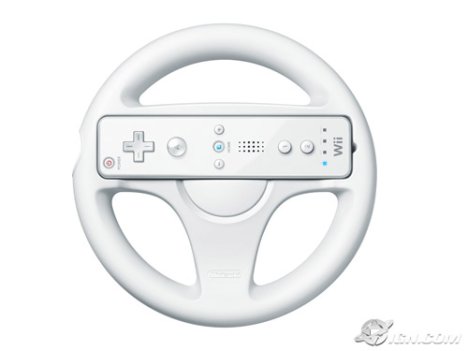
For the Wii alone I seem to have collected two wimmotes and nunchucks, at least one plastic guitar (two if you count the one I've borrowed from the department), a Mario Kart steering wheel and four GameCube controllers (that I seem to have acquired on long term loan). The funny thing about Mario Kart is that I found the the steering wheel to be the most difficult choice of controller. Playing it with a group of friends the other week, it seemed like the more traditional GameCube controllers were easiest, though one us seemed quite happy using the Wiimote and nunchuck combination. Maybe it's because the older controllers are just the ones I've had more experience with, but it still seems a little odd that the option that appeared to be the most intuitive, wasn't in practice. I just don't get what the advantage was supposed to be, and considering it's essentially a bit of plastic you just stick the Wiimote in, I'm not going to be buying any extra ones for my friends.

You see, besides the issue of where you are supposed to store all this equipment, it's also worth asking how you are supposed to pay for all of it? Nintendo are really pushing their periperals - for the Wii, you can get a Sharp shooter, a Light Sword and tennis rackets to name but a few. With things like the Zapper that comes with Link's Crossbow training, it's not even clear whether you'll be able to use the peripheral for anything else. Further, it's a little confusing which controllers you can use with what games as there is also the Classic Controller and the option to download retro games through the Virtual Console.

As consumers, are we really expected to buy every add on we can get? I think what really annoys me about the whole thing is how much emphasis companies like Nintendo have placed recently on the social side of gaming but at the same time they only provide one set of controllers. Plus, it's not exactly cheap get the set of four (don't forget you need a Wiimote and a Nunchuck) that would allow you to take full advantage of multi-player gaming. I'm pretty sure the same is true of the PS3 and Xbox 360 as well. Anybody else remember the days when you could buy a Sega MegaDrive with two control pads?

Monday, 10 March 2008

Lego Star Wars: The Complete Saga (Wii)

I borrowed Lego Star Wars from Lovefilm a little while ago and have been really getting into it. I did have a slightly rocky start as it took me a little while to realise that the cantina I started in wasn't a proper level even though you could explore it and start fights with people. I eventually found the set of doors where you get to pick which part of the saga (i.e. episodes 1-6) you want to play. While not having a manual probably contributed to my initial confusion, it wasn't a problem in terms of the controls as I found it was very easy to pick up them up. One of my favourite discoveries was being able to use the z button to build stuff out of seemingly random bits of Lego, and finding out I could "use the force" on objects and characters with a blue glow around them. Plus, if your character has a sword you can swing the Wiimote to use it.

The initial appeal of the game I think for me was how it manages to combine two very familiar things in an entertaining way. Lego Star Wars looks good. I was walking past the Lego store in town the other day and I actually thougth about buying something. Plus, I know these films, especially the ones I watched as a kid, so I don't need to hear the dialogue to know what's going on in the story. It's far more enjoyable to see the Lego characters mumble and shrug while they act out classic scenes. Even better, you seem to get to be able to play all the characters at some point, unlocking more as you go on. While you can swap between a certain set in each level e.g. Obi Wan, Luke, C3PO and R2D2 in some of the earlier ones, once you've completed the challenges you can go back with any unlocked character and do the level again in free play mode. In fact, if you want to unlock hidden areas and collect everything it looks like you have to go through them all again. I wonder if this is enough incentive to do so?

That is one of the things that struck me about the game - it really feels like it's about collecting stuff. I mean of course there is the Star Wars plot and the associated challenges (rescue the girl, kill the baddies, save the world etc) but the game is really arranged around how much of what you collect and whether you have achieved "True Jedi" status on every level. I mean it was obvious from the start that you should collecting the large numbers of gold, silver and occasionaly blue studs - which are either lying around or you get from building/destroying/using the force on object. What is more interesting though is that I wanted to collect them, and collect them all if I could. I mean there are hundreds of these things, and when you destroy somethinng they fly out at you and you don't always have enough time to collect them all (which is a little annoying especially when they also spill over a ledge you can't jump down). At first I thought you needed them to buy things at the cantina. Then when I started episode one I noticed the bar at the top which started to fill up the more studs I collected. If you get enough you achieve "True Jedi" status. I still don't quite know what that means but you get a little tick at the end of the chapter if you achieve it. Td how many of the golden bricks, and mini-kits you have found and how many are left for you to discover. And I want them all, even though I'm not sure what happens if and when I manage to do so. Part of the incentive is that further aspects of the game will be unlocked in the process but I doubt that if I did manage to collect everything the outcome would be as exciting as I feel it should be. The main point though, is that the way the game has been designed means it's not just about getting to the end of each level, but it's also about exploring the entire game to unlock each section.

It's a little similar to playing Super Mario Galaxy and having the desire to collect all the star bits. I was talking to Will the other day and we agreed that we hate it when we're watching someone else play and they don't collect really obvious ones. I can't help thinking that this collecting aspect means Lego Star Wars comes across as more of platform game than an action adventure one. For example, in Zelda you do collect gems but the purpose of them is so you can buy other things that are useful to your adventures like better armour and weapons, or oil for your lantern. In contrast, in the Sonic and Mario games you collect gold (rings and coins respectively) but just to see how many you can get. Things like star bits, studs or gold coins aren't even power ups as such, at least not until you collect enough of them and get an extra life or something. Is that enough of an incentive to explain the drive to pick them all up? Something else seems to be going on here but I'm not sure what.